ServicesInvestment Management
Investment Management in Eatontown
We look at the portfolio you already have, keep what is working and change what is not. Most accounts need adjustments, not a teardown. When starting over makes more sense, we tell you why in plain terms and show you what the move costs.
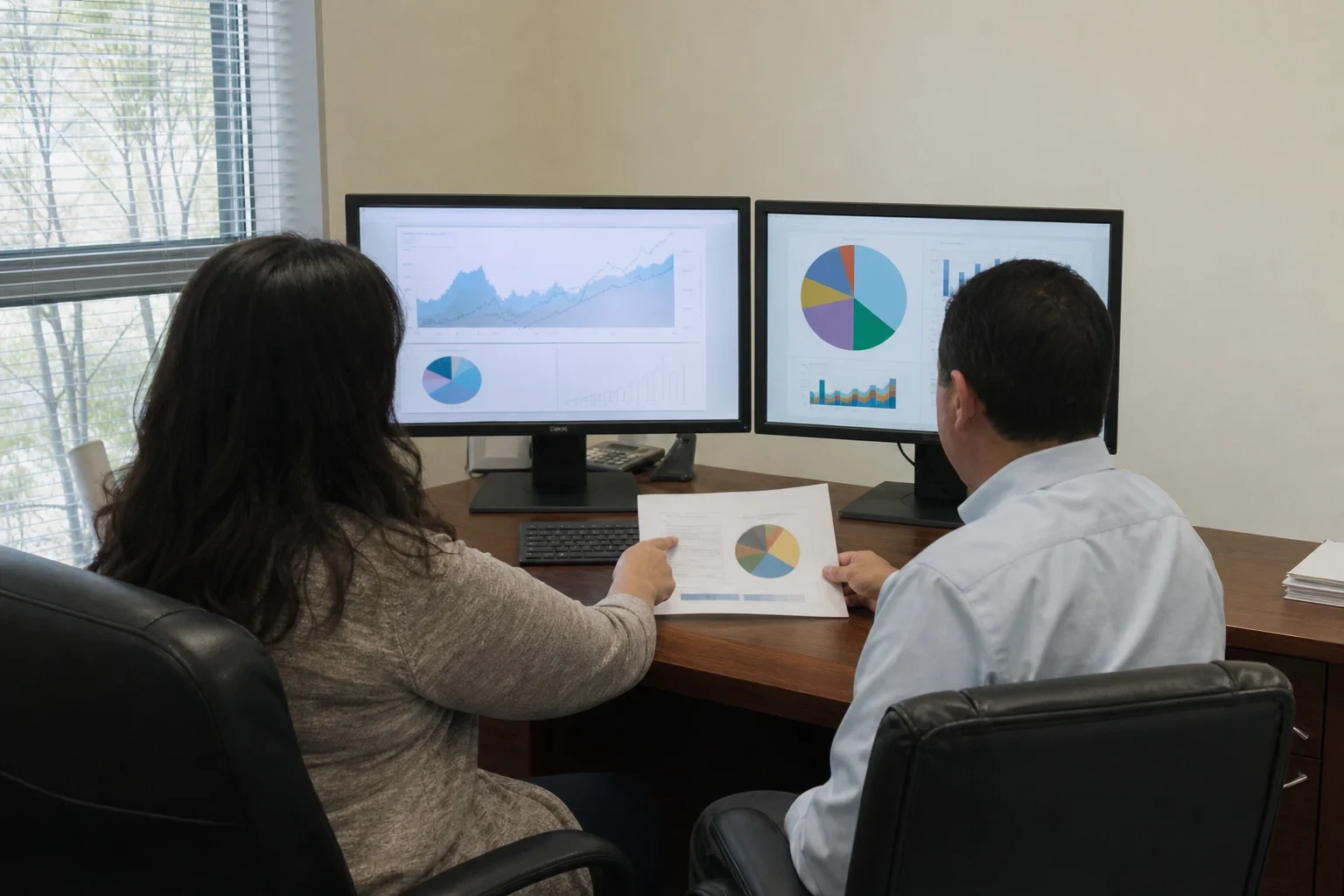
Managing what you own before selling anything new
Investment management means picking, monitoring and adjusting what sits in your accounts, year after year. That includes brokerage accounts, IRAs, 401(k)s from past jobs and any cash you keep aside. The aim is a portfolio that matches your goals, your timeline and the swings you can actually stomach.
Many people walk in expecting to sell it all and begin again. Most of the time that isn't needed. Selling can bring a tax bill, fees and poor timing. So first we sort through your holdings. Some funds are doing their job. Some duplicate each other. Some charge too much. We change the pieces that need it and leave the good ones alone.
Now and then a larger overhaul is the better choice. Picture a pile of forgotten accounts, or a mix that was set up for someone much younger. In that case we lay out why, what the move will cost and what you gain. Clients from Eatontown and the surrounding Monmouth County towns work with us in person or over a phone or video call.
What the work includes
- Everything on one page
- We gather all your accounts and holdings into a single view. You can see what you own, what each fund charges and where funds repeat each other.
- A stock, bond and cash split that fits
- We set the mix based on what the money is for and when you'll draw on it. Cash you need in three years is invested very differently from savings meant for retirement two decades away.
- Rebalancing
- As prices move, your mix slides off target. We pull it back on a set schedule or once it wanders too far, so no single piece ends up carrying extra risk you never agreed to.
- Watching the tax bill
- In taxable accounts we check the gain before selling anything. We also think about which account each holding should sit in. Where it fits, this connects to our tax management service.
- Checking what you pay
- We review expense ratios, account fees and trading costs. Replacing one pricey fund often helps more than hunting for the next big winner.
- Reviews on a schedule, and when life shifts
- We walk through the portfolio with you at regular intervals. We also take a fresh look when something big happens, such as changing employers, selling your company or losing someone close.
Signs your portfolio needs a closer look
You're not sure what you own
If you'd have to log into four websites to answer that, it's time to get it on one page.
Old 401(k)s left behind
Every job change can leave an account sitting in default picks. Those choices may not fit you anymore.
Many funds doing the same thing
Owning ten funds isn't the same as being spread out. Many of them hold the same big companies, so you get the same risk ten times.
The mix hasn't changed in years
If you're a decade closer to retirement and the portfolio looks the same, it may be taking more risk than you want. It's easy to miss because nothing feels wrong until the market drops.
Market drops keep you up at night
That usually means the risk level is off for you. Better to adjust it in a calm month than sell in a panic.
What happens after you call
- 1
Introductory meeting
First we listen. Tell us what the money is for, when you'll need it and what worries you. Recent statements help if you have them handy. Meet at our office or over a phone or video call.
- 2
Portfolio review
We read through each account one line at a time. Then you get a plain summary of your holdings, their costs and how well they match your goals.
- 3
Keep, adjust or replace
Every holding lands in one of those three piles. Adjusting is usually most of the job. If we think something should go, you see the reason and the tax hit before anything else.
- 4
Making the changes
Nothing gets traded without your okay. We often spread changes out over time to keep taxes and timing under control.
- 5
Ongoing management
From there we keep an eye on things, rebalance when needed and meet to go over results. If your situation changes, we change the plan to match.

What moves the cost
We can't give you a number until we've seen what you hold. The cost tracks how much work your accounts take to set right and keep on track. Before you sign anything, we put our fees and how we get paid on paper so you can read them at your own pace.
- How much money is involved
- Bigger portfolios tend to spread across more accounts and more holdings. That means more decisions to make and watch.
- How many accounts, and what kind
- One IRA is quick to manage. Brokerage accounts, leftover 401(k)s, a trust and a business retirement plan all at once take more coordination.
- How far off the current mix is
- Some portfolios need a handful of small changes. Others need a larger rebuild spread over a few tax years, and that takes more time.
- Taxes on the table
- Big unrealized gains, required minimum distributions or income from a business mean each trade gets more planning first.
- How often we sit down
- Once a year is enough for some clients. Others want a check-in every quarter. You pick the pace and we agree on it up front.
Investment management questions
Something not covered here? (732) 696-7265
Do I have to sell everything and start over with you?
No. We begin with what you already own and hold on to whatever still fits your goals. Dumping it all at once can run up taxes and fees for nothing. When we do suggest swapping something out, you see the reason and the cost before you decide.
Can you promise a certain return?
No. Anyone who promises one isn't being straight with you. Prices rise and fall, and no one controls that. Our job is to match the portfolio to your timeline, keep fees low and hold risk at a level you can stick with when things get rough.
What about the 401(k) at my current job?
Bring it in and we'll look at it alongside everything else. You can only pick from the plan's list of funds, but there's often a better combination on that list. We set it up so it fills a gap in your other accounts instead of repeating them.
How often will we talk?
That's up to you and what's happening in your life. We put regular reviews on the calendar and reach out when something big shifts, like retiring or receiving an inheritance. If a question comes up between reviews, call us.
Do I have to come to the office?
No. A lot of clients do everything by phone or video. Some prefer to sit across the table. We're fine with either.

Bring your statements and let's take a look
Set up an introductory meeting and we'll go over what you hold and where it stands. You'll leave knowing what to keep and what deserves a change.