ServicesLegacy Planning
Legacy Planning in Eatontown
Most people already have part of a legacy plan: a will, a few beneficiary forms, maybe a life policy. We look at what you have, keep what still fits your wishes and change only what doesn't. Your family gets a clear plan, not a pile of new paperwork.
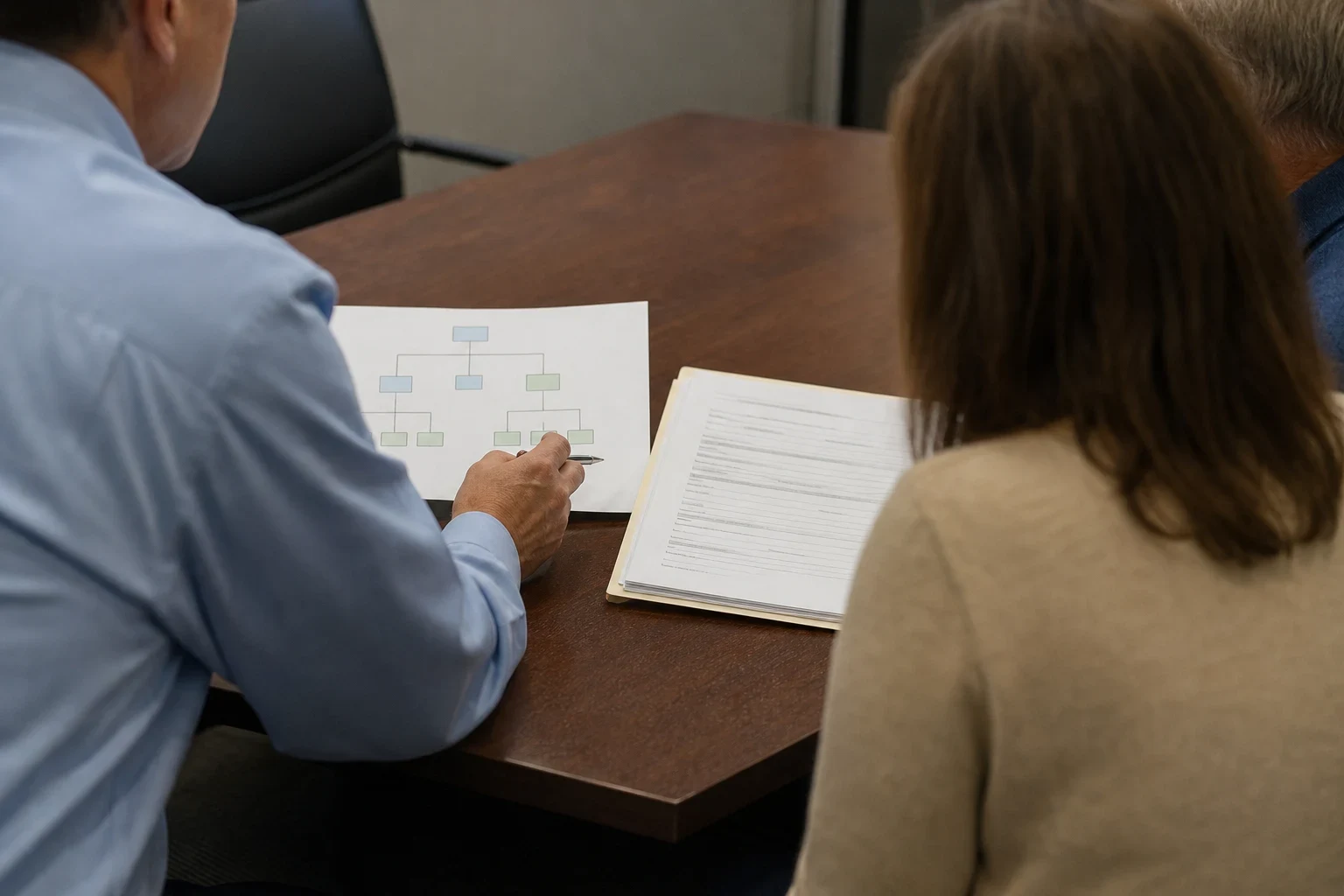
What legacy planning covers
Legacy planning decides what happens to your money after you're gone, and who or what it goes to. It covers who inherits, how each account transfers, when they get it and what taxes or delays stand in the way. We handle the financial side and work alongside your estate attorney, who drafts the legal documents.
We start with what is already in place. A will from ten years ago may only need a few beneficiary updates to line up again. Sometimes the old setup no longer fits, like after a second marriage or a business sale, and a bigger change makes more sense. We tell you which one you're looking at and why.
Meetings happen at our Eatontown office, or by phone and video, which helps when grown children live out of state and want to sit in.
What the work includes
- Beneficiary review
- We pull every retirement account, annuity and life policy and check who is named. Beneficiary forms override a will, so an old form can send money to the wrong person. This is often the fastest fix in the whole plan.
- Account titling check
- The name on an account and the way it's registered can send it straight to an heir or tie it up in probate. We look at joint accounts, transfer-on-death options and accounts held in a trust.
- New Jersey inheritance tax review
- New Jersey can tax an inheritance based on the heir's relationship to you. Your spouse, kids and grandkids usually pass that tax by. A brother, sister, niece, nephew or close friend may not. We show you where it could apply and what can be done about it.
- Coordination with your attorney
- We don't write wills or trusts. We share a financial summary with your estate attorney so the documents and the accounts say the same thing.
- Charitable and family gifting
- If you want to give during your lifetime, we look at which assets make sense to give and how it fits your own retirement needs first.
- A written summary for your family
- You get a plain list of accounts, who inherits each one and who to call. Your executor won't have to dig through drawers.
Signs your legacy plan needs a look
Your family looks different now
A wedding, a split, a loss or a baby born into the family can all leave old forms naming the wrong person. The paperwork doesn't update itself.
You can't remember who you named
If you opened a 401(k) at a job years ago and never checked the form, it's worth a look. It takes less time than most people think.
Your heirs aren't your children
Leaving money to a sibling, niece or friend can bring New Jersey inheritance tax into play. A small change in how it passes may matter.
You own a business
Without a plan for who takes over or buys out your share, the business can stall when your family needs it most.
Your documents are older than your accounts
A will written before you rolled over a pension or bought property may not reflect what you own now.
What moves the cost
Legacy planning is priced by the work your situation needs, and every family's setup is different. Tidying up a few beneficiary forms is a much smaller job than planning around a business or a blended family. We explain how we charge at the introductory meeting, before anything gets started.
How much is already in place
If your will and forms mostly fit, the work is smaller. Starting from nothing takes longer.
Number of accounts
Ten scattered accounts from old jobs take more time to track down and sort than two or three.
Family situation
Second marriages, children from different relationships or a family member with special needs add planning steps.
Business ownership
Succession and buyout planning for a business owner is its own piece of work.
Ongoing help
A one-time review is priced differently than staying on to update the plan as things change.
From first talk to finished plan
- 1
Introductory meeting
You tell us who matters to you, what you hope to leave and what paperwork already exists. Nothing gets signed. It's a sit-down conversation.
- 2
Gather and review
You bring statements, policies and any existing documents. We map every asset and who it goes to today.
- 3
Show you the gaps
We walk through what lines up and what doesn't. Where an update will do, we say so. Where a bigger change is the better call, we explain the reason in plain terms.
- 4
Make the changes
We help update beneficiary forms and account titles and send your attorney what they need for any document work.
- 5
Check in over time
We revisit the plan when life changes or every few years, so it doesn't drift out of date again.

Legacy planning questions
Do you write wills and trusts?
No. That's legal work for an estate attorney. We handle the financial side, like beneficiaries, account titles and tax exposure, and we work with your attorney so everything matches. If you don't have one, we can talk about what to look for.
Do I have to throw out my old plan?
Usually not. Most plans need updates, not a full redo. We keep what still fits and only suggest bigger changes when the old setup can't do what you want anymore.
Does New Jersey still have an estate tax?
No. New Jersey repealed its estate tax, but an inheritance tax is still on the books. Whether it applies comes down to how the heir is related to you. Money left to a spouse, a child or a grandchild typically passes without it. A brother, sister, niece, nephew or someone outside the family can end up owing it.
How does life insurance fit in?
A policy can give heirs cash to cover taxes or even out an inheritance, like when one child takes over a business. Our Life Insurance Consulting page covers how we look at existing policies and new coverage.
Can my adult children join in?
They can, as long as you'd like them involved. Plenty of clients have grown kids dial in by video so the whole family gets the same explanation together. That makes for fewer surprises and fewer arguments down the road.

Start with what you already have
Bring your old will, your statements and your questions. We'll show you what still works and what needs attention.